Local Projects
Combining global expertise and local knowledge to build resilient infrastructure for stronger communities.
STRABAG’s project experience combines global expertise with a long-standing presence in Australia and New Zealand, delivering complex infrastructure across transport, water, mining, tunnelling, buildings and civil construction.
Through our network of specialist businesses and local delivery teams, we bring international capability, innovation and technical excellence to projects that support the growth and resilience of Australian communities.
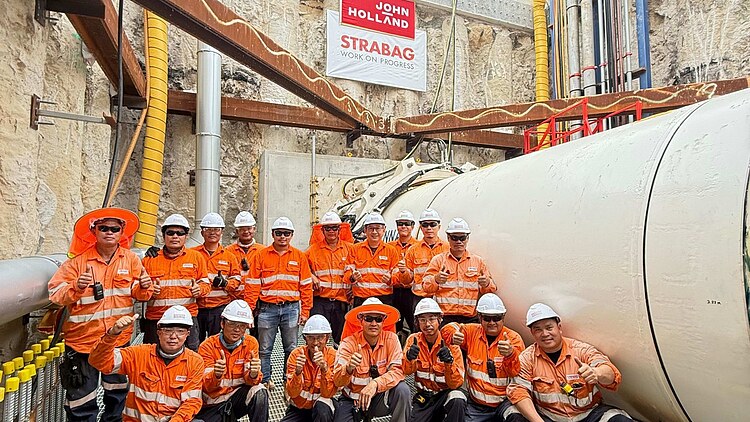
BELMONT DESALINATION PLANT INTAKE TUNNEL
Client:
John Holland
Scope
STRABAG is undertaking pipejacking works to construct a 814-metre subsea intake tunnel, forming a vital component of the desalination plant’s seawater intake system. The tunnel will be formed using 2,000 mm internal-diameter concrete jacking pipes, designed for long-term subsea operation.
Once complete, the Micro Tunnel Boring Machine (MTBM) will break through into an offshore caisson, where it will be safely retrieved using a jack-up barge.
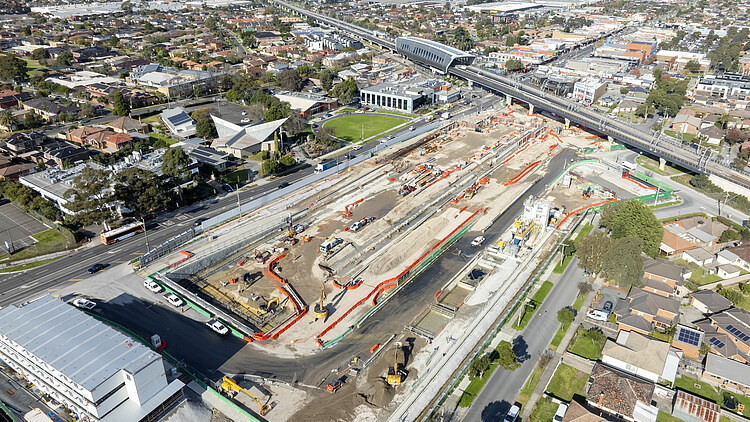
Suburban Rail Loop Ground Freezing
Client
Suburban Connect (CPB, Ghella and Acciona)
Scope
Drawing on its many years of experience in ground freezing, STRABAG's subsidiary ZÜBLIN Ground Engineering is contributing extensive expertise and specialist equipment for the construction of nearly 30 cross passages using the ground freezing methodology on Melbourne's Suburban Rail Loop.
The Suburban Rail Loop will transform Victoria’s public transport network by building a 90km orbital rail line The new system will connect every major train service in Melbourne, better connecting Victorians to employment, hospitals, universities and each other. Suburban Connect is delivering SRL East, which will be fully underground, connecting Cheltenham and Box Hill with 26km twin tunnels. SRL East has been under construction since 2022 and is expected to enter service in 2035.
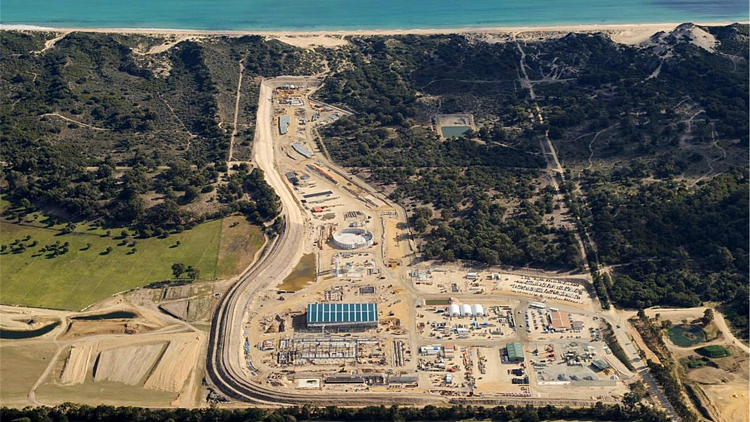
SOUTHERN SEAWATER DESALINATION PLANT
Client:
Water Corporation, Western Australia
Scope:
Construction of two seawater intake tunnels and outfall tunnel using pipe jacking technology incl. supply of reinforced concrete pipes: 965 m of ID 2,000 mm, 1,720 m of ID 2,400 mm (2 x 860 m). The project successfully executed complicated double curves of the tunnel. This was addressed with the use of the latest technology in precision guidance resulting in deviations from target point within +/- 20mm.
The TBM was recovered from the sea bed and trenchless tunnelling techniques meant a reduction in the potential environmental, social and visual impact to the surrounding area.
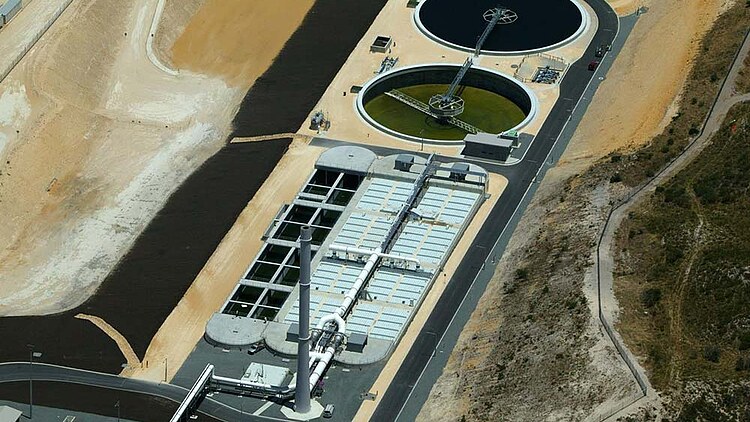
ALKIMOS WASTE WATER TREATMENT PLANT
Client:
Water Corporation, Western Australia
Scope:
A member of STRABAG Group, Züblin formed together with Multiplex Engineering Pty Ltd and Macmahon Contractors Pty Ltd the MMZ Joint Venture.
Together with the Water Corporation of WA the MMZ JV then formed the Alkimos Water Alliance (AWA) to deliver the Alkimos Waste Water Treatment Scheme. In 2008, the design and construction of the Alkimos Waste Water Treatment Plant was added to the original scope of works after the MMZ JV won the tender.
The plant was developed in five stages. The design and construction for Stage 1 (January 2009 until December 2010), had a total capacity of 20,000 m³/d, the final capacity of the WWTP to be 160,000 m³/d.
MANAPOURI TAILRACE TUNNEL
Client:
Meridian Energy Pty Ltd
Location:
New Zealand
Scope:
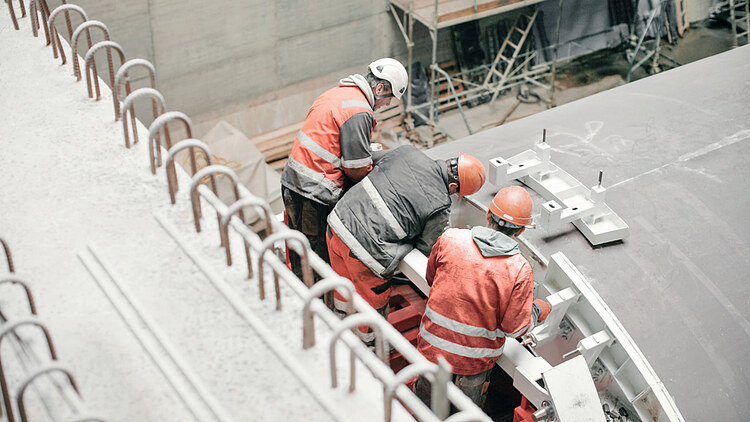
Enlargement of the existing Powerplant with a 9.6 km long TBM-tunnel with a diameter of 10.05 metres. The project consists of further three shafts, several exittunnels and various underground works.
Tunnel length: 9,616 m
Diam/Cross: 10 m
Excavation underground: 800,000 m³
Excavation aboveground: 3,000 m³
Concrete / shotcrete underground: 25,000 m³
Concrete / shotcrete aboveground: 3,000 m³
Reinforcement: 800 tons
NORTHPARKES MINES (NSW): TUNNEL BORING SYSTEM TRIAL
Client:
Rio Tinto
Scope:
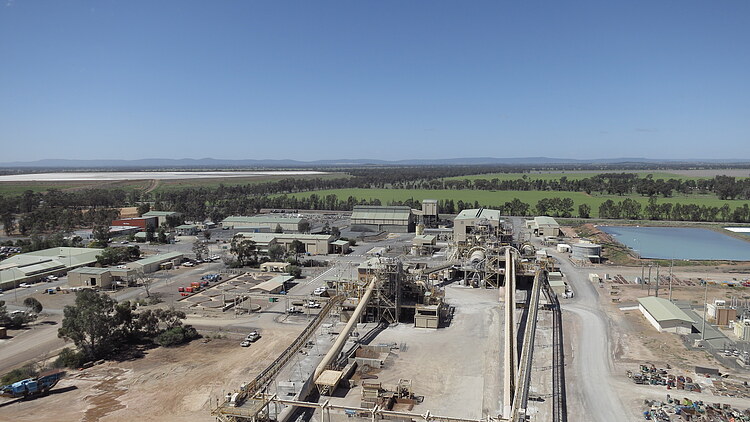
The project consisted of commissioning, testing and trial running a prototype Tunnel Boring System (TBS) at the Northparkes underground copper-gold mine in New South Wales under Rio Tinto’s Mine of the Future program. The work was performed in the operational environment of the mine and approximately 600 m below ground, with rock bolts and shotcrete installed by the machine as ground support.
ALKIMOS WASTE WATER TREATMENT SCHEME
Client:
Water Corporation, Western Australia
Scope:
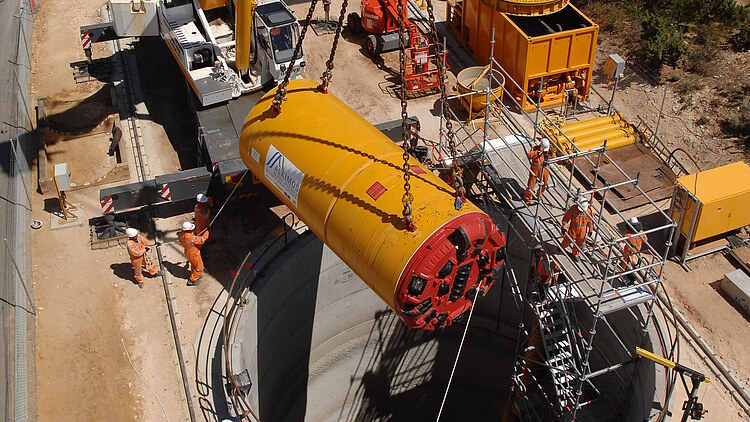
Scope included the construction of a 6.3 km section of ID 2.0 m sewer by pipe jacking to connect the existing Quinns Main Sewer to the new Alkimos Waste Water Treatment Plant facility in the northern Perth suburbs.
- Construction of a main sewer line employing pipe jacking technology (diameter: 2 m, length: 6,300 m)
- 13 jacking / receiving shafts with a maximum depth of 20 m
- Complex and highly variable regional geology with both sand and hard rock
- Maximum torque of 800 kNm on the 15 m long Tunnel Boring Machine (TBM)
- Excellent accuracy: The latest technology in precision guidance employed Deviations from target point were within +/- 20 mm
- Reduction of potential environmental impact: Trenchless tunnelling techniques mean less environmental, social and visual impact to the surrounding area
- A maximum of 84 m of tunnelling progress achieved in one 24 hour period
- Project completed 3 months ahead of schedule (despite a 4 months approval delay at the beginning of the project)
Winner of the CCF Earth Award 2011 for Excellence in Civil Construction.